ValidMind for validation series
Jupyter Notebook
Created as part of an initiative to highlight our validation features that we previously neglected to showcase.
Technical Writing
I was the sole Senior Technical Writer for ValidMind, a generative artificial intelligence financial services startup, where I employed docs-as-code methodologies alongside software engineers delivering documentation as part of product in the same development ecosystem, transforming a minimal set of user guide drafts into a fully idealized and comprehensive knowledge base.
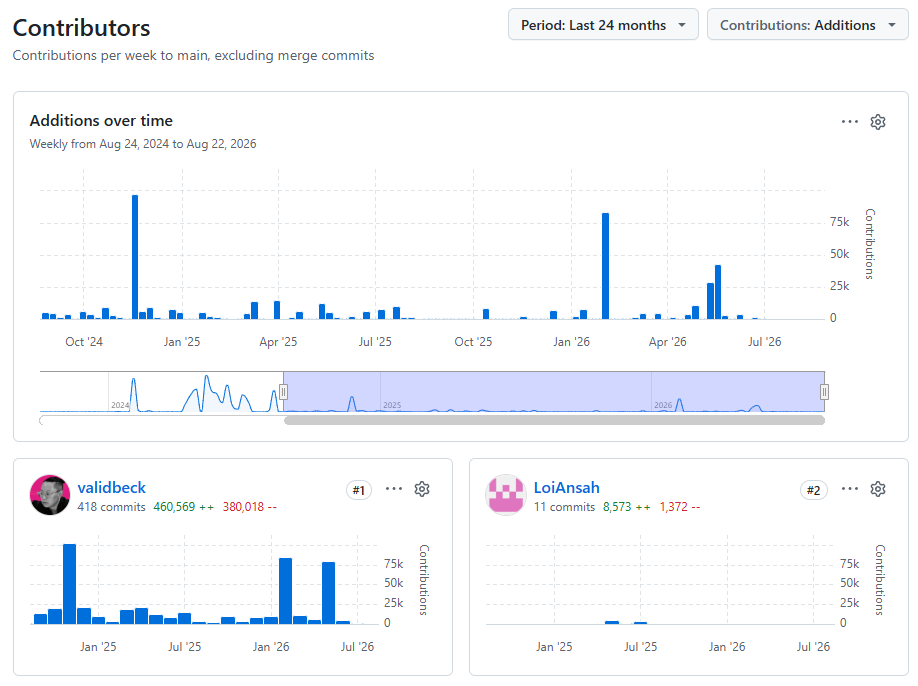
As I authored the bulk of 53% of user content out of many contributors,1 most of ValidMind’s documentation saw my influence at some point. For the samples below, I’ve selected only my best work as my contribution to ValidMind spanned too much content to collate in its entirety.
1 Citation: validmind/documentation statistic archive
Jupyter Notebook use case demonstrations written for ValidMind’s Python library.
I owned the linked notebooks in this section from start to finish.
I led the creation of these notebooks, supported by another team member as my subject matter expert.
Comprehensive interactive training curriculums developed to onboard users onto ValidMind.
For the samples below, I was responsible for everything from curriculum planning, to content, to design refinement, starting from sparse one-module drafts created by another writer. I included these samples as I owned at least 75% of the content.
User guides produced as documentation and reference for ValidMind’s core features.
For the samples below, I’ve selected only my best work where I authored the bulk of the content as my contribution to ValidMind spanned too much content to collate in its entirety.
As the company subject matter expert for workflows, I owned all of the below guides in their entirety from start to finish.
Part of my focus at ValidMind was bringing our validation guidance up to a higher standard, as material showcasing validation capabilities was sorely neglected.
I owned at least 95% of the content below in the linked iteration — a small portion of the “Usage” tab was based on previous sparse drafts or have received one or two edits from others, but most guides were owned by me from start to finish.
I owned all of the linked guides below from start to finish.
I owned all of the linked guides below from start to finish.
I owned all of the linked guides below from start to finish.
I owned all of the linked guides below from start to finish.
Intuitive quickstart guides developed to onboard users onto ValidMind.
I took a previously jumbled section of fragmented guides, with no clear learning outcomes and missing user role journeys, to a streamlined portal that empowered every type of new user. I owned all of the new quickstart guidance linked below from start to finish.
Compare:
Content produced to enable other creators to contribute to ValidMind’s open-source.
One of the first things I did at ValidMind was establish and publish our documentation style guide, based off of a sparse internal draft of general writing guidelines.
As Jupyter Notebooks operate as self-contained units, you’re unable to easily single-source content that’s repeated in other notebooks or documentation.
To encourage other notebook authors to use our consistent ValidMind notebook structure, I created a Python script and an accompanying interactive notebook that generates a notebook draft with all the right bits and pieces.